Quantico
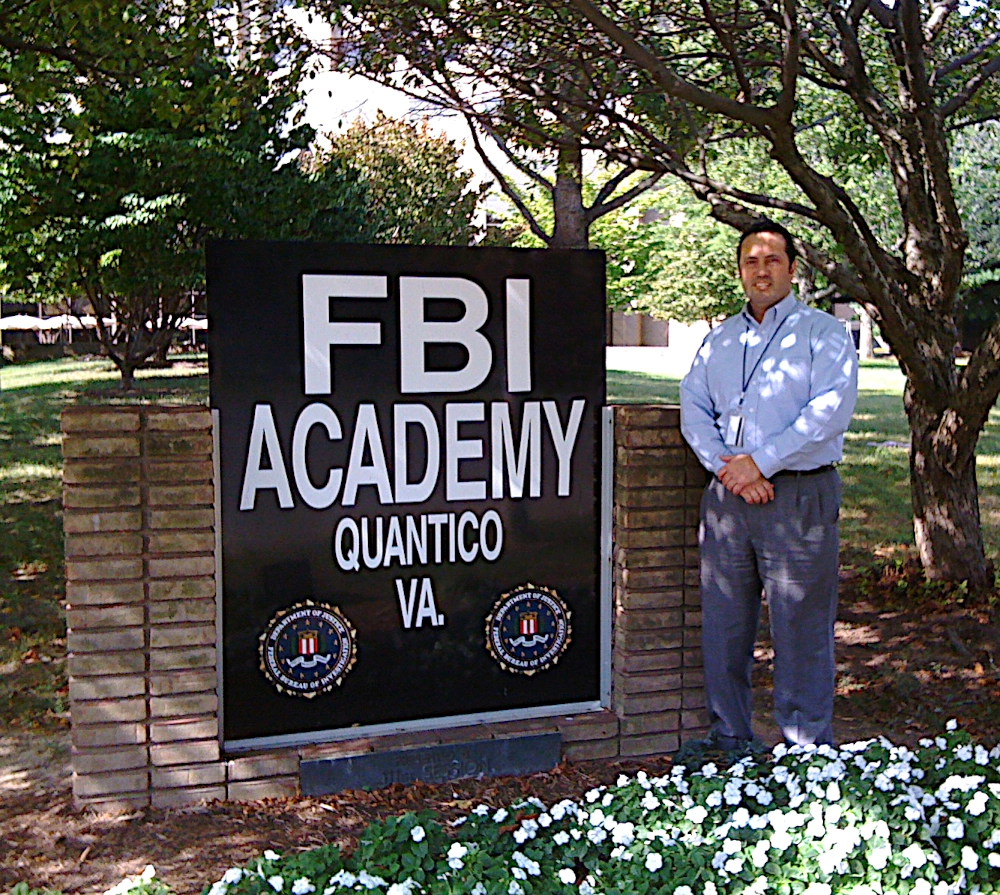
This story encompasses the federal agencies I had the honor to work for, and the very talented Agents I had the pleasure of working with. There are many Law Enforcement Officers and Agents who have accomplished so more than I ever have. This is just my story and some of my experiences that I would like to share.
The information list below is publicly available on the FBI website and other government websites. Any other content is generic to illustrate my experiences.
The F.B.I. Joint Terrorism Task Force (JTTF)
What is the F.B.I. Joint Terrorism Task Force?
Below is an excerpt from the FBI website describing the role and function of the JTTF: Joint Terrorism Task Force.
The FBI’s Joint Terrorism Task Forces, or JTTFs, are our nation’s front line of defense against terrorism, both international and domestic. They are groups of highly trained, locally based, passionately committed investigators, analysts, linguists, and other specialists from dozens of U.S. law enforcement and intelligence agencies.
JTTFs serve as a national resource and create familiarity among investigators and managers before a crisis by conducting frequent training to maintain the specialized skills of investigators, analysts, and crisis response teams. JTTFs pool talents, skills, and knowledge from across the law enforcement and intelligence communities into a single team that responds together.
The first JTTF was established in New York City in 1980. Today there are about 200 task forces around the country, including at least one in each of the FBI’s 56 field offices, with hundreds of participating state, local, and federal agencies.
The Opportunity of a Lifetime
While working as a detective in the Intelligence Unit at my local Agency, it was common for our unit to partner with FBI Agents on cases. These cases were of interest to both our local jurisdiction and the FBI's federal jurisdiction.
As time passed, we got to work with the FBI often. After a few months, the JTTF supervisor asked if I would be interested in being a part of the Task Force. He advised that I would be a great fit, if I was interested.
I enjoyed working the Agents quite a lot and would always learn something on every case. I was pleasantly surprised they were interested in me becoming a part of the JTTF. Of course I said yes, and was very happy to have this great opportunity.
Once my Agency approved this full-time assignment with the FBI, the long process of applying for a Top Secret (TS) clearance and Sensitive Compartmented Information (SCI) clearance began.
The Clearance Application Process
The application entails the past ten years of your life, and they do check everything, and everyone, even where I used to live in California. They also check all your financials, including investments. Once you compete the application, I was advised they can usually approve your secret clearance in a few months so you can attend meetings, but you do not have access to anything. The complete application process for your TS and SCI clearance takes much longer.
I recall the complete background check process took approximately 8-10 months? After the background investigation was completed, I found out I was still in the running, aka, not disqualified.
If you ever what to make applying for a home mortgage seem easy, check out the Office of Personnel Management publicly available 124 page online QUESTIONNAIRE FOR NATIONAL SECURITY POSITIONS. This does not include any supplemental documentation or underlying additions.
Next I had to take a polygraph. Even though I took one to get into the academy, and then one to become a sworn law enforcement officer, the FBI has their own of course. This would be my third polygraph in my law enforcement career. I will say it's pretty nerve racking to take a polygraph later in life, versus right out of school. There are so many more life experiences they can ask about, and you have to have an answer.
The morning of my exam, I remember driving about an hour to meet with them, and take the polygraph. It was actually more low key than I expected. It was not long after, that I found out I passed, thank goodness.
During my career, I do recall a few prospective candidates who did not get their clearances approved for one reason or another. It did not mean they were bad people, it was for some technicality I gather. This topic was private of course, and based upon a need to know, and I did not need to know.
I remember getting a call from the JTTF supervisor. He advised that I had passed and would soon be officially a full-time member of the FBI JTTF. It was a very exciting time in my life and career.
Once everything was in place, I drove to the main field office to get read into my clearance. You have forms you have to read and sign. It is there that they also take your photo, and issue you your credentials, etc.
It was a big responsibility, and you give up all your privacy. They can lawfully check all your activity, your travel, and all of your internet activity. If you leave the country you have to tell them where you will be, where you are staying, and how to reach you if needed.
Working at the FBI
I remember the first time I logged into the system with my new credentials. One of my first emails in my inbox was a welcome message from one of the supervisory Agents. He said 'welcome to the club'. It was a great feeling to read that email, but I also knew it was his nice way of saying, 'now get to work'.
There were so many great Agents and Task Force Officers I got to work with. Some of them were actually with President Bush on 9/11. Their stories of being right there on that day and what happened were incredible.
There were also many investigations I got work on with these Agents. While I was mainly assigned to terrorism cases, I was fortunate to have the opportunity to work on a few criminal and financial cases.
Flying Armed
During some of these investigations, we would have to follow leads that took us to different locations, some close, and some far away. We would travel to several locations, some of which out of state. It was during these trips that I learned about the process of fly armed. There were many other things you have to do of course, but the training certificate below is just an illustration of one of those steps.
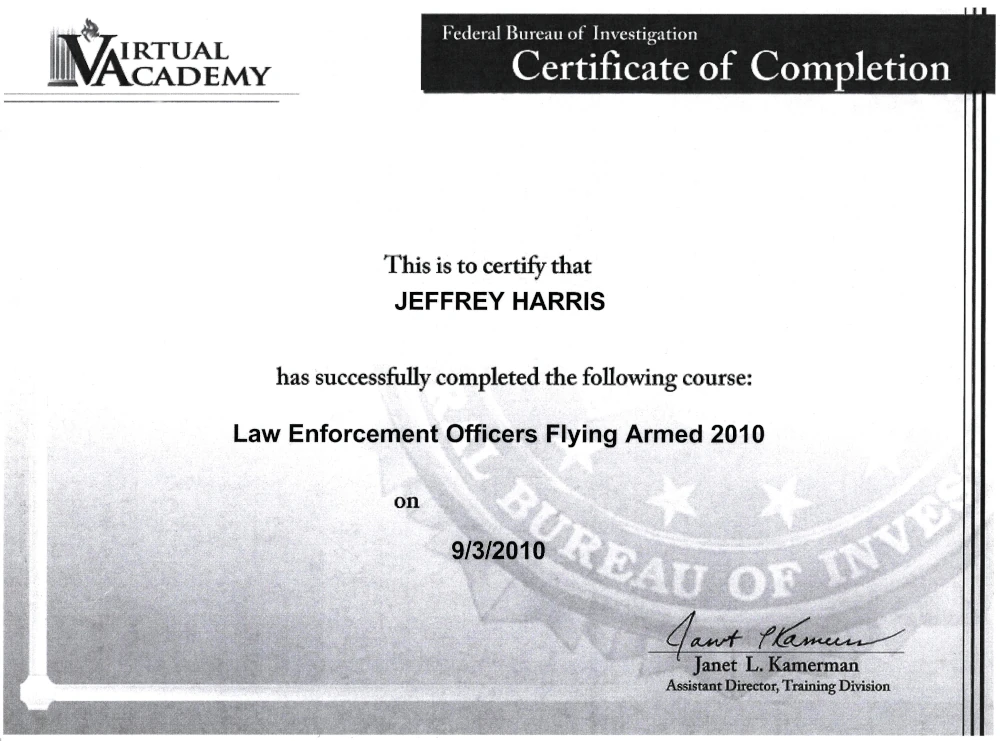 Basic Course For Flying Armed
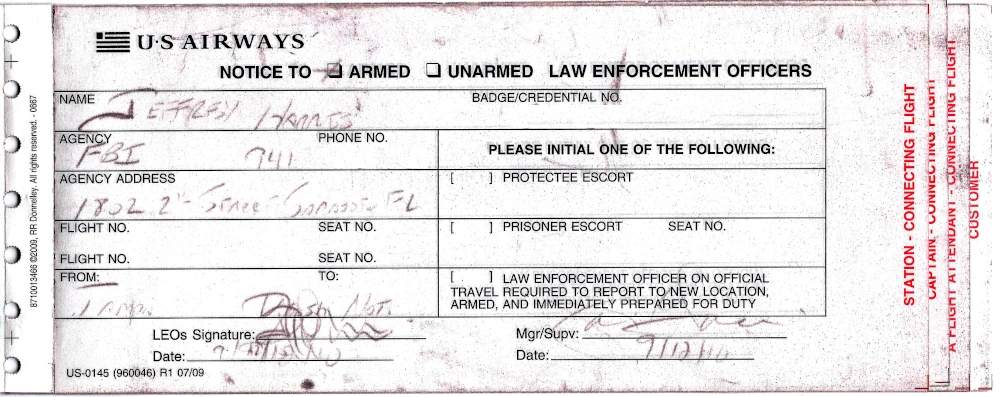 Flying on 9/12. Redactions
It was a little nerve racking of course, but it was also great to be traveling with seasoned Agents who helped me learn the ropes, so to speak.
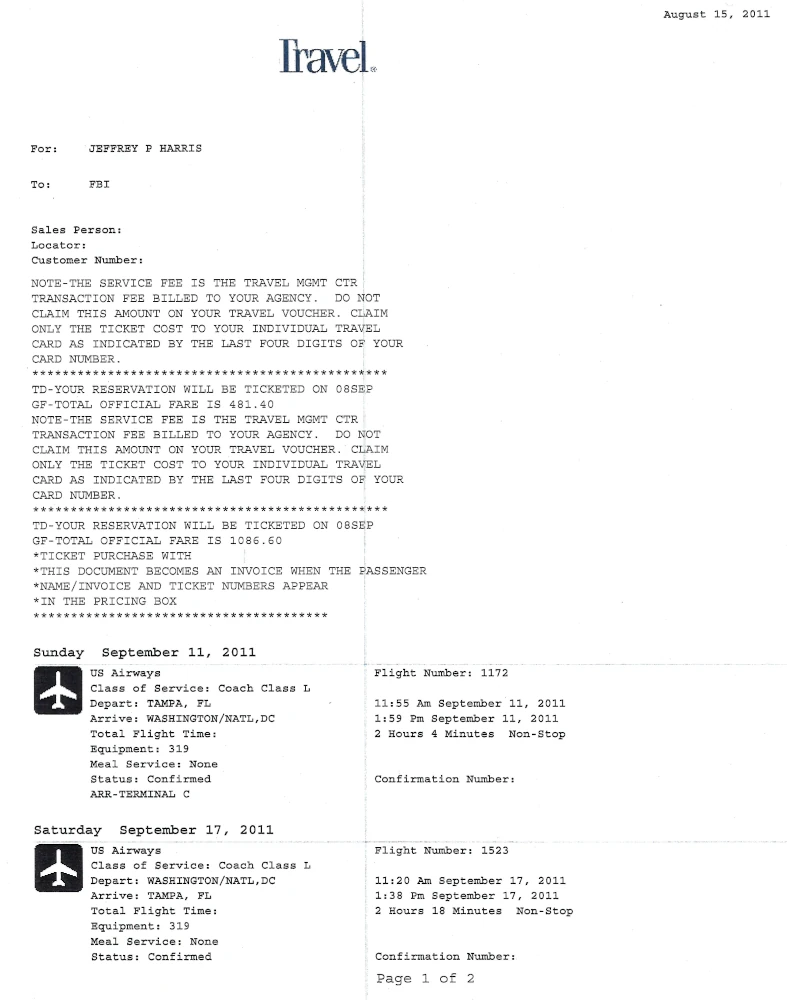 For this flight, I traveled to Quantico on 9/11, which was a little concerning. Redactions
Air Marshall's are the experts in this field of course. If you're interested in that field or how the process works, you can check out their website here
Learning How The FBI Conducts Interviews
When I became a detective at my Agency, I got to work with some great investigators. These guys were great at interviewing and interrogation. With their help, I learned quite a bit about this art form.
When I began conducting interviews at the FBI, that was a whole 'next level' experience for me. It was at the FBI that I really learned, through observing and listening to some great Agents, how they conduct interviews.
There was one Agent in particular, Agent Martinez, who I was very lucky to get assigned with on a few criminal cases. We conducted hundreds of interviews together. I got to see how he crafted his language, and how he was able to obtain many successful admissions. After a period of time, he brought me in to conduct these interviews with him.
It was through these hundreds of interviews conducted with Agent Martinez, that I really learned the craft of interview and interrogation on the federal level. I was always still learning of course, but now I had the confidence to walk into any situation and derive the best possible outcome, for those circumstances and cases.
Negotiations
The FBI taught me this principle: Always work the process correctly, and stick to that process. You will then have the best outcome possible, for that moment. As long as you follow the process, you can not fault yourself if something goes wrong. If you stray from the process, that's when things become problematic.
I was lucky to get to attend many FBI negotiator training sessions, and other interview and interrogation training sessions through my Agency and the FBI.
In addition, there were a few FBI training sessions that I attended on my own time, and paid for personally. I did this to keep learning as much as I could, because one of my goals was to become a negotiator at some point in my career.
Through these trainings, I was able to became a regional director for our statewide negotiator organization. I was even not on my local Agency's negotiation team yet, but those experiences and trainings eventually earned me a negotiator spot a few years later. Those extra training certificates came in handy.
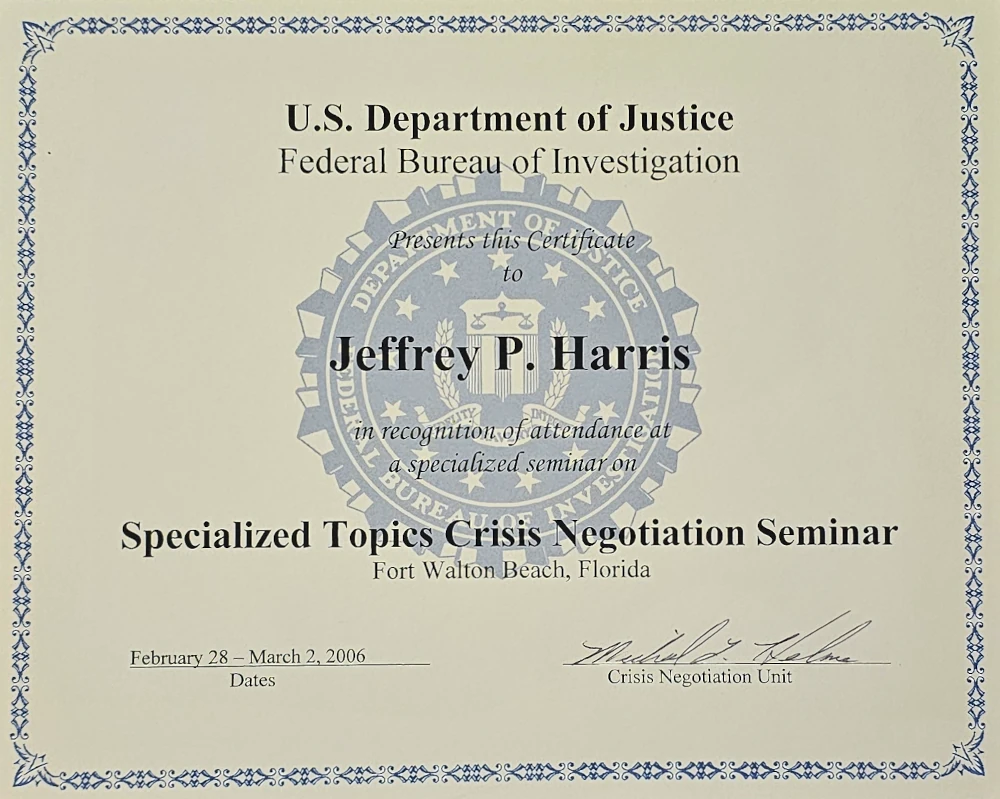
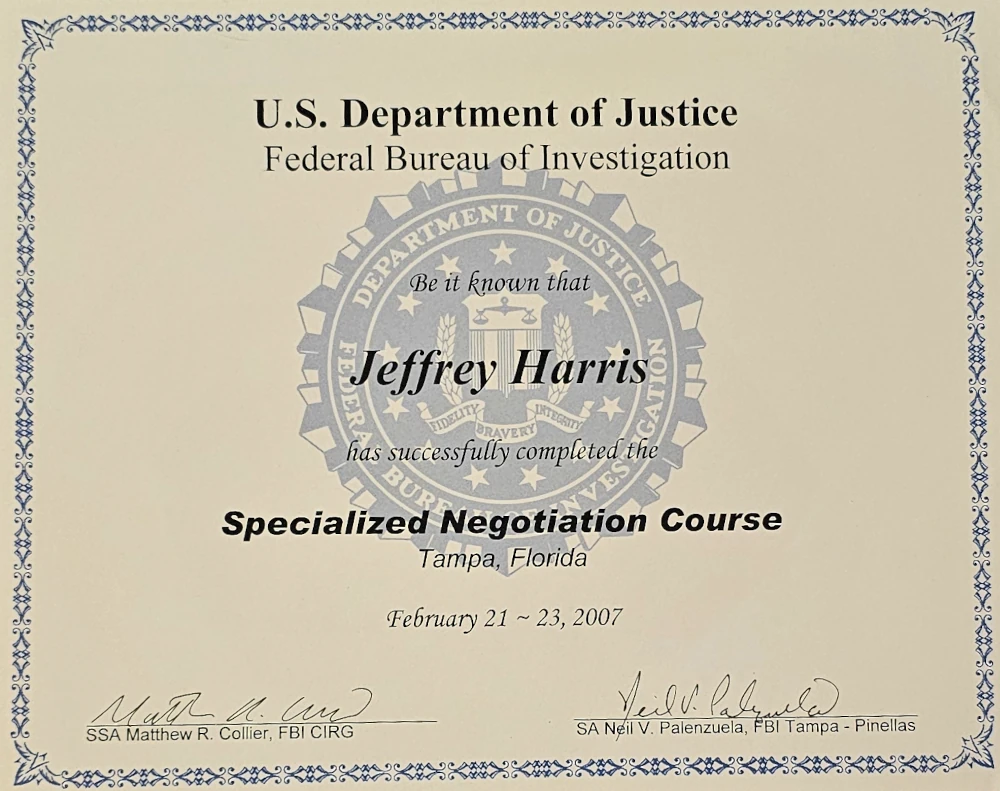
Another great negotiator resource is LENS. It is for law enforcement negotiators, and contains many other resource databases. Here is the FBI LEEP public website if you are interested and want to read more about that subject.
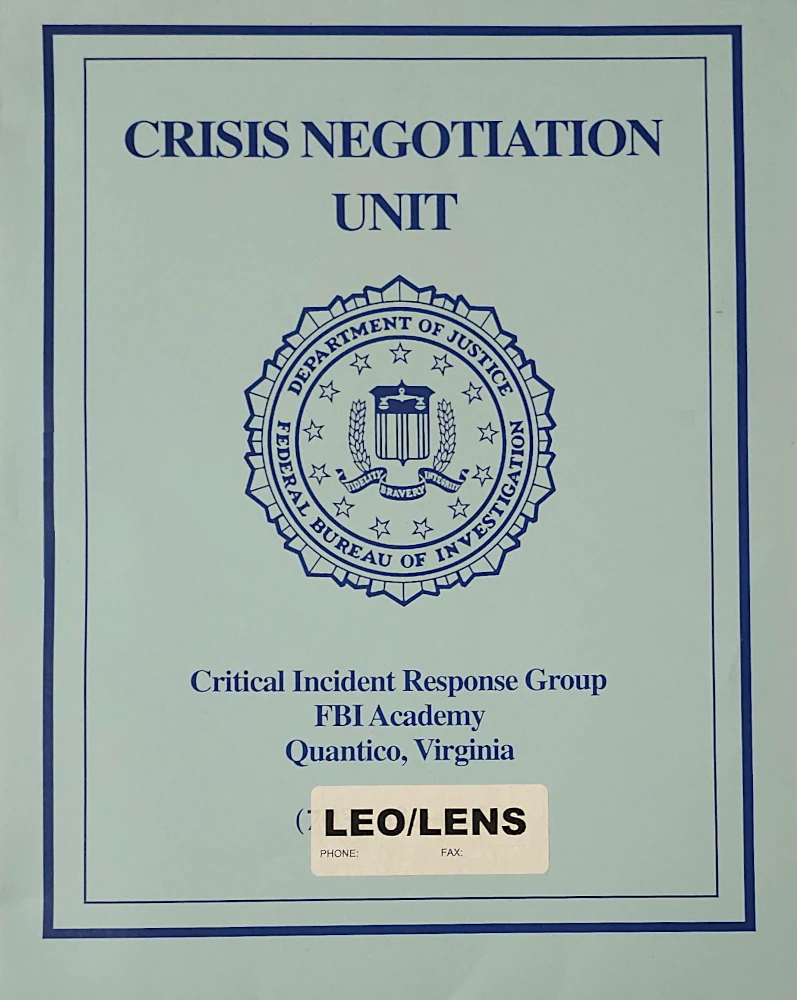 Law Enforcement Negotiation Support (LENS)
Quantico Training
Every member of the JTTF has to complete formalized training on FBI investigations, including several other aspects of working as an FBI Task Force Officer. Eventually, it was my turn on the list to attend this training at Quantico. It was another once in a lifetime experience.
When you fly out to Quantico, there is a whole process for getting from the airport, to the training facilities. Security, checking in, room assignments, the dinning hall, and of course your schedule.
Once we arrived at Quantico, you get issued your credentials, your assigned room passes, and then you go to your dorm room to drop off your luggage. You have to check in your weapon while you are there, but you can check it out whenever you leave the premises.
Even though I had my own room, it never left my mind that someone somewhere is probably monitoring at least some of my activities? Maybe, maybe not, but it was a great time being at Quantico, either way.
While staying there, you have the option purchase high band internet access for your dorm room, which I did. It was great because in the evenings I would play minecraft online with my Daughters. It helped me relax, and I think it helped them also, just to have some fun while I was away.
Robert Philip Hanssen
In the main entrance to where you go to your dorm room and the common leisure areas, they have a display of some actual espionage items used by former FBI Agent Robert Philip Hanssen who spied on the USA for Russia.
Robert Philip Hanssen was a horrible person who betrayed America. In the 1980's and 1900's he sold Russia the identities of FBI Agents and sources in Russia. I actually worked with a retired FBI Agent whose job it was to recruit sources to use in Russia during that time period. He advised at the time, they could not figure out why so many were getting killed or went missing, until they discovered the traitor, Mr. Hanson.
On the FBI website is information about Robert Hanssen. There was also a movie made in 2007 about this person what happened: Breach
Quantico Training Facility
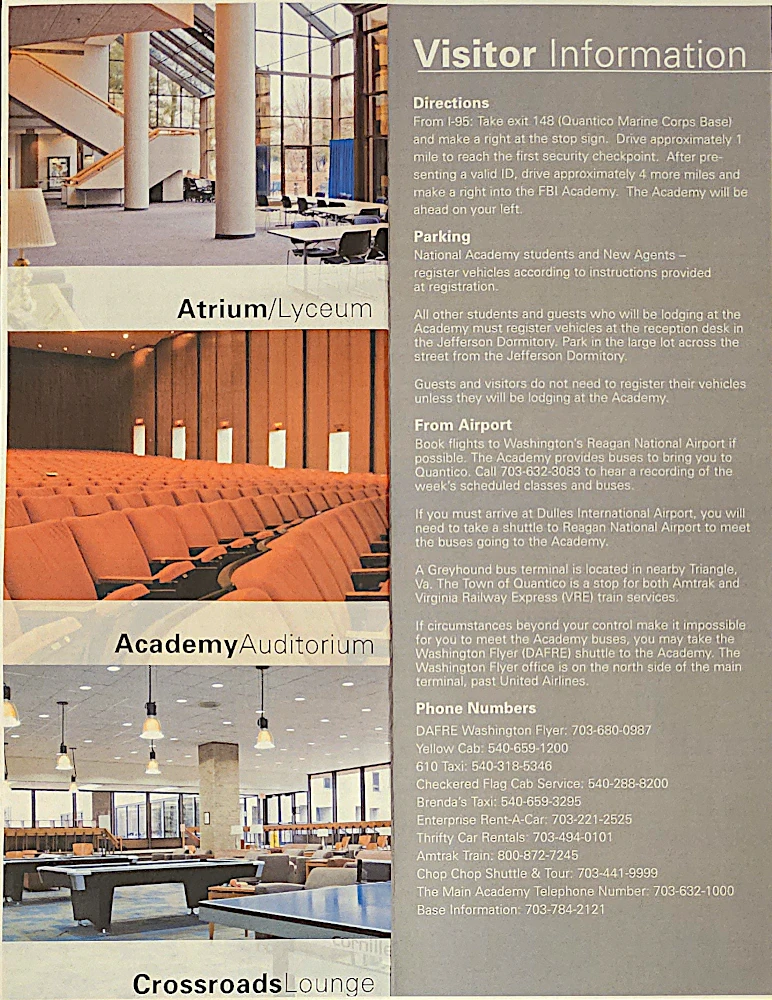
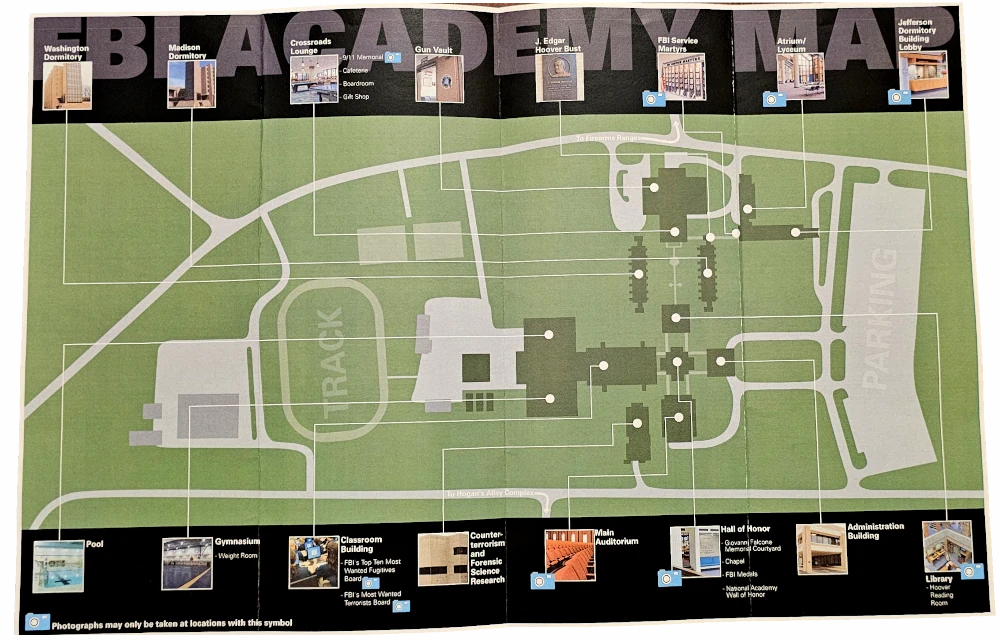
The training facility had new buildings and and some older buildings. This was cool for me because you could still see some of the FBI history at Quantico. One thing that was also very nice, was all the wild deer that were freely wandering the grounds. We would see them in the mornings and at the end of the day. It gave me a sense of relaxation during all the training.
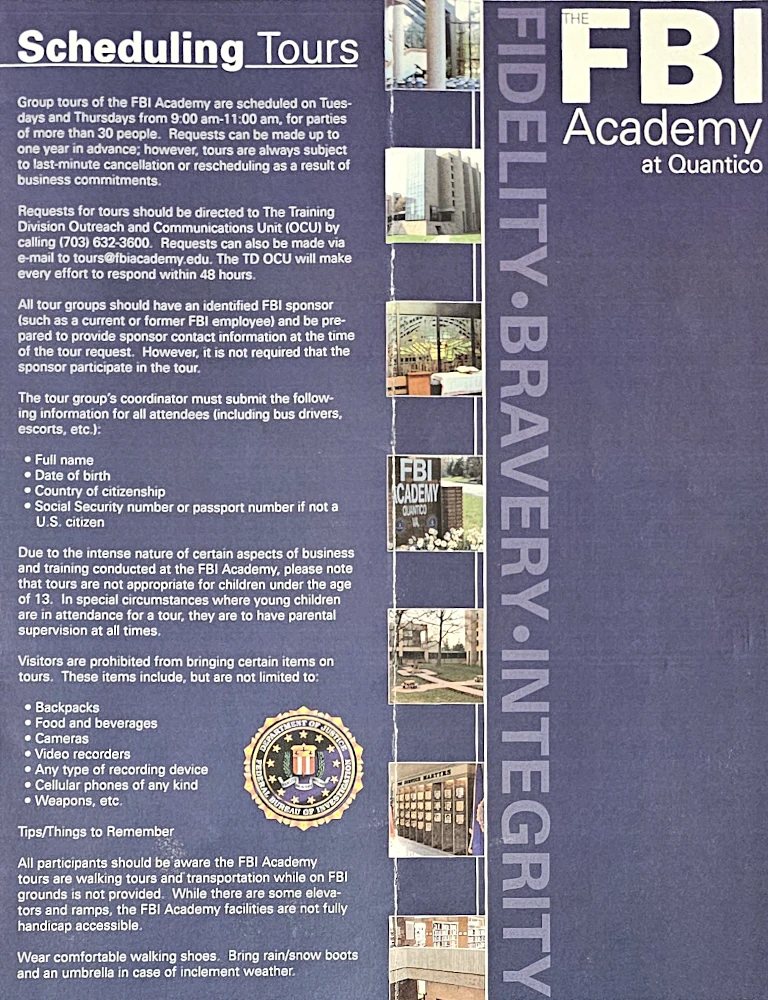
Here is a copy of the FBI visitor brochure which is publicly available.
Hogan's Alley
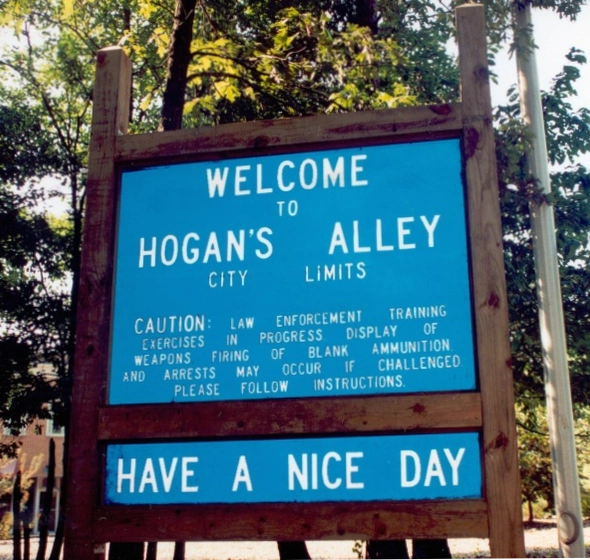
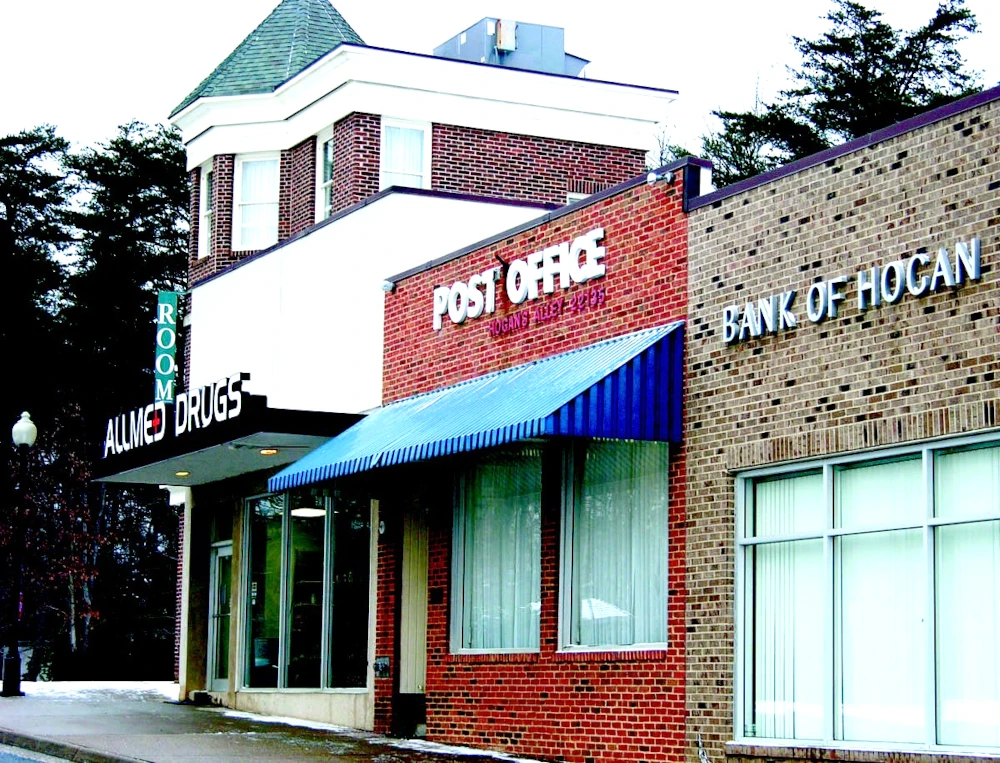
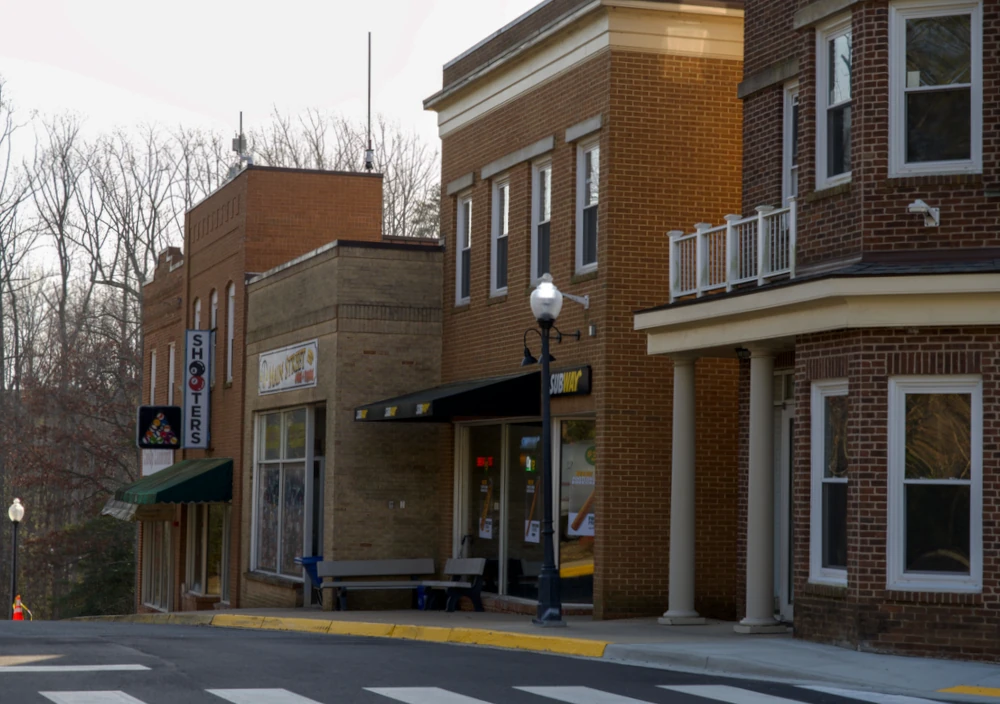
Hogan's Alley is the famous fictional town where a lot of the training for FBI Agents is conducted. They usually have several active scenarios going on throughout the day. While we were there, they advised we are allowed to walk through Hogan's Alley, but if we see active training, to not go near them or engage with them.
Images below are from the public FBI media website, granting permission to use and crediting.
JTOOC Orientation And Operations Training
Now it was time to get to work and learn what we needed at Quantico for our JTTF assignments. This was a great time because we learned a lot of new things, and it validated what we were already doing. This training gave us a lot of knowledge and resources to do our jobs better.
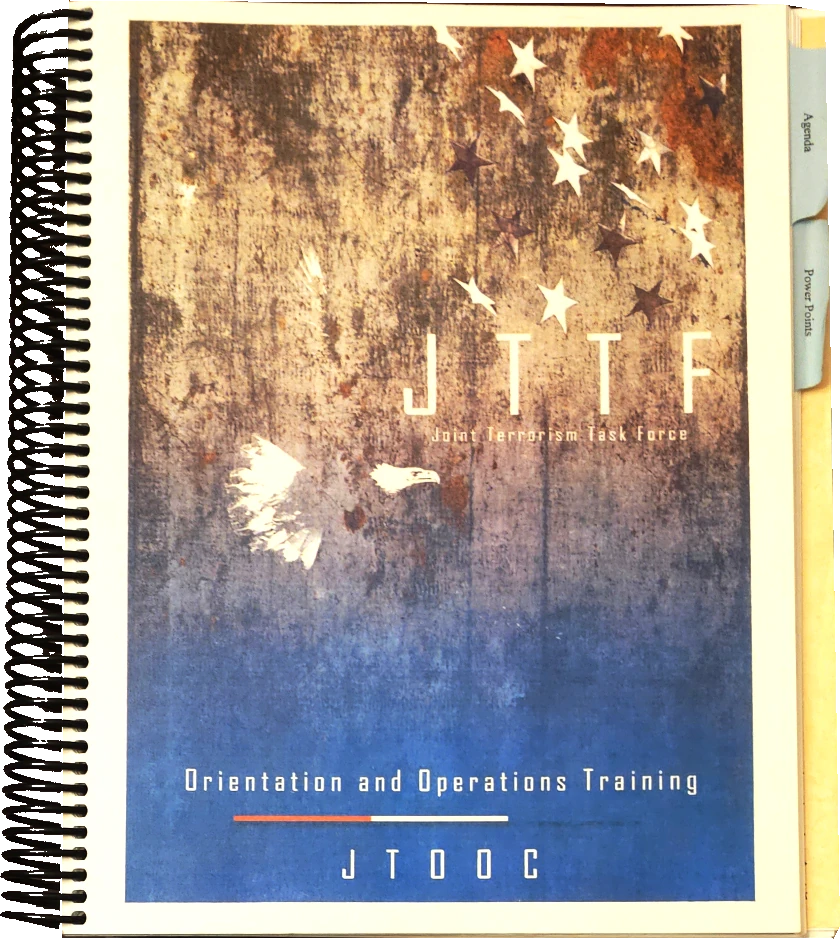 The JTTF Course Book.
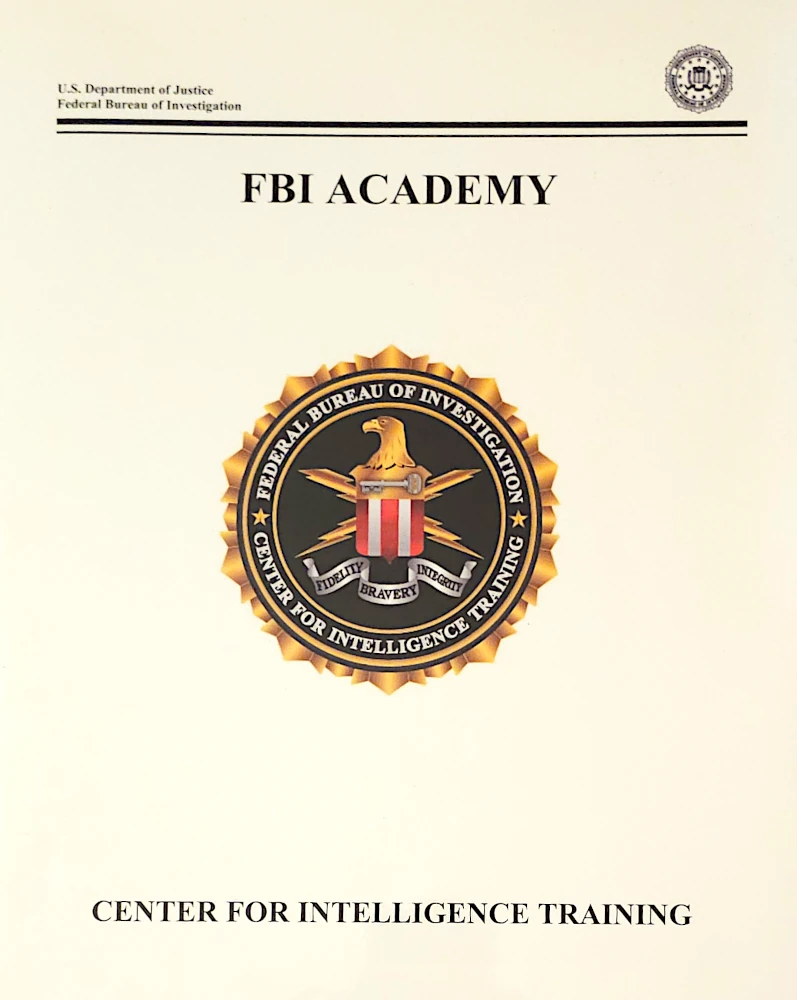 FBI Course Material
We also learned about how the FBI conducts investigations and the high legal investigative bar that must be followed and met to have successful cases.
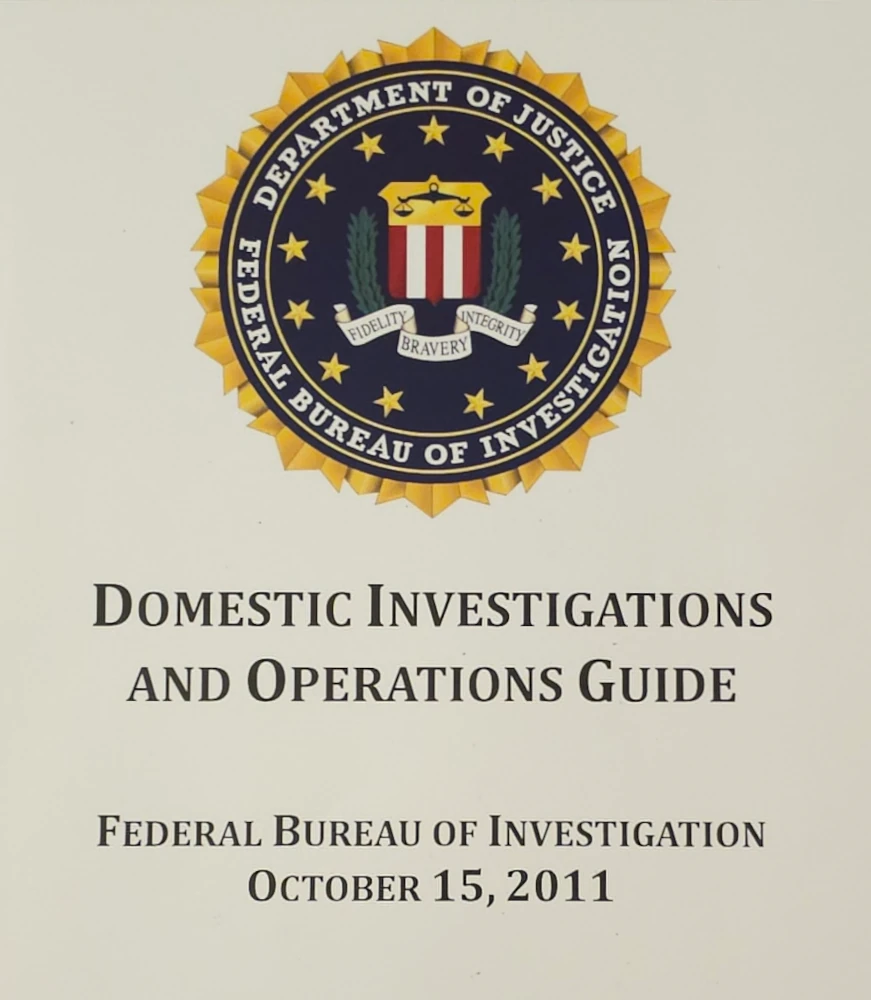 The DIOG is publicly available online at fbi.gov Redacted.
This book is about 400 pages of policies and procedures, fun times.
The DIOG is publicly available online at fbi.gov Redacted.
This book is about 400 pages of policies and procedures, fun times.
FBI Analysts
Below is an excerpt from the FBI website describing the role and function of FBI Analysts.
"Intelligence Analysts are at the heart of the Federal Bureau of Investigation's (FBI) intelligence work. They bring together information collected by the Bureau’s Special Agents along with other intelligence professionals, Intelligence Community sources, and other law enforcement organizations and use that to make informed judgements and recommendations. Analysts also draw on their knowledge of specific issues as well as the language, culture, and history of geographic regions to do their jobs."
Some FBI Analysts are also Subject Matter Experts. These are people that have extensive knowledge in one specific area. The FBI, as with every Agency, has experts in almost any subject you could think of. They're a great resource if you need expert information regarding an aspect of your investigation.
While at Quantico we got to meet with one Subject Matter Expert who was a terrorism expert. Oddly enough, this person recommended we watch the movie "The Four Lions". They advised that this movie was actually not too far from reality, in some cases. The movie was pretty entertaining, and received great reviews.
Here is an FBI publicly available website outlining the role of FBI Analysts who are Subject Matter Experts. It's as very specialized field.
More Training
I was very lucky to have gone back to Quantico for a second time to get more training. It was great to be back and even though this training was more technically involved, it was a bit more relaxing.
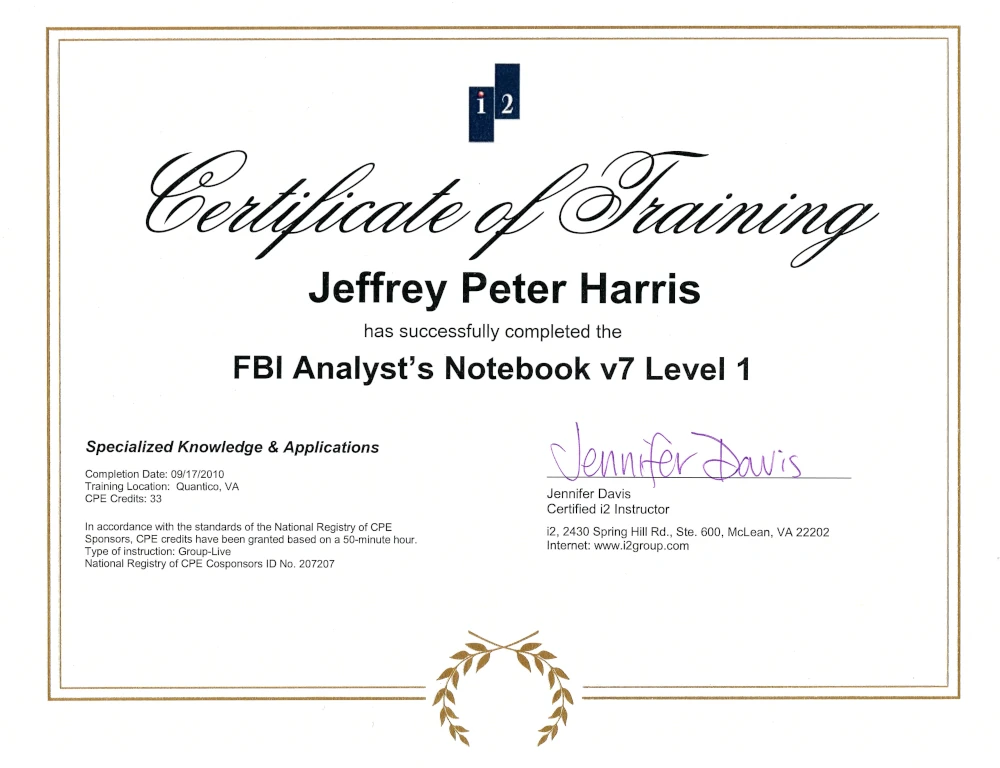
While I was there, I took a little bit of time to visit the merchandise store by the dinning hall, and get all my FBI fan stuff of course. Travel bag, jacket, pens, and a few other items.
Back to Work
Now that we had our official JTTF training completed, it was time to hit the ground running again. There were always leads to work, case reports to complete, and interviews to conduct.
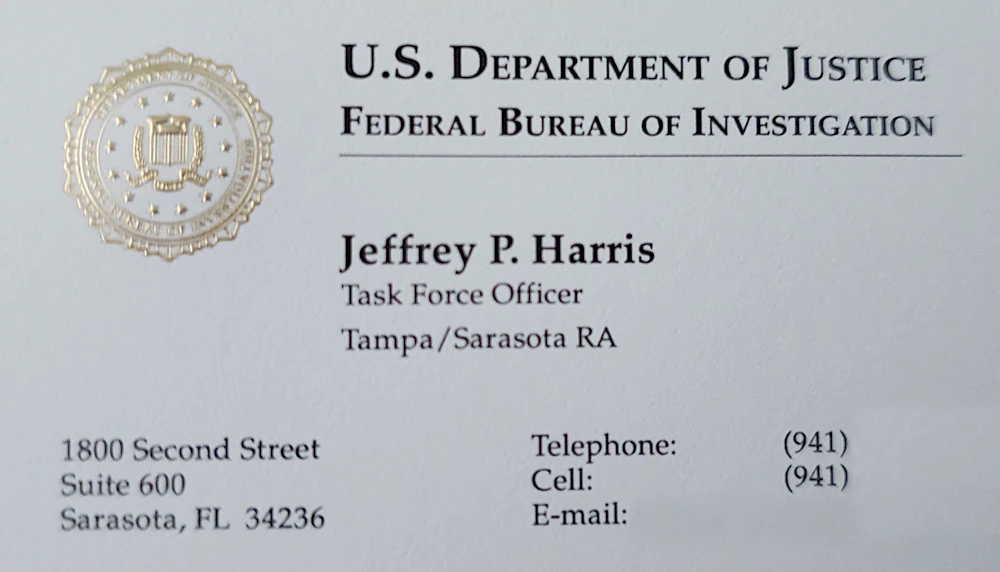 It's Official, Redacted.
Assistant United States Attorney's Office (AUSA)
If you're lucky to get your cases accepted for prosecution by the DOJ, then there are meetings to attend with the Federal Prosecutor. These meetings are regarding case updates, planning, indictments, and then pleas, or trial prep.
There were many great cases we worked on, and several great Prosecutors we got to work with. A few of these criminal cases required us to be at the Assistant United States Attorney's Office (AUSA) everyday. Sometimes our daily visits would last several months. So much, that the Prosecutors got tired of coming down stairs everyday to let us in all the time.
With this, we eventually were issued our own DOJ AUSA passes to enter and exit 24/7. The AUSA also gave the FBI Agent and I our own office in the Attorney's section. It was crazy busy but it was also a lot of fun.
A Ham Sandwich
On the lighter side of things, there was an investigation in which I was getting ready to testify as the federal agent, for my first grand jury indictment. It was nerve reckoning of course.
Under oath, you have to assert the facts of your investigation in front of the grand jury. You also have to be prepared to answer questions from the grand jury, if they need clarification. Based upon the evidence you present, and how well you can support the evidence, they will either grant it or deny it.
What I did not know before I entered the grand jury, was that the excellent and very confident AUSA Prosecutor had poised a question for me with one of the jury members. Of course this question was not going to be asked if my testimony did not meet the legal standard to obtain the grand jury indictment.
So, after I completed my sworn testimony, one grand jury member said, may I ask you a question, to which I said yes. This person then asked me, "Where you in the band, Big Bad Voodoo Daddy?" Everyone smiled and then I answered, yes, with a look of confusion of course, and then a big sigh of relief. It was then that I knew, I had passed the test.
Special Deputation Oath of Office
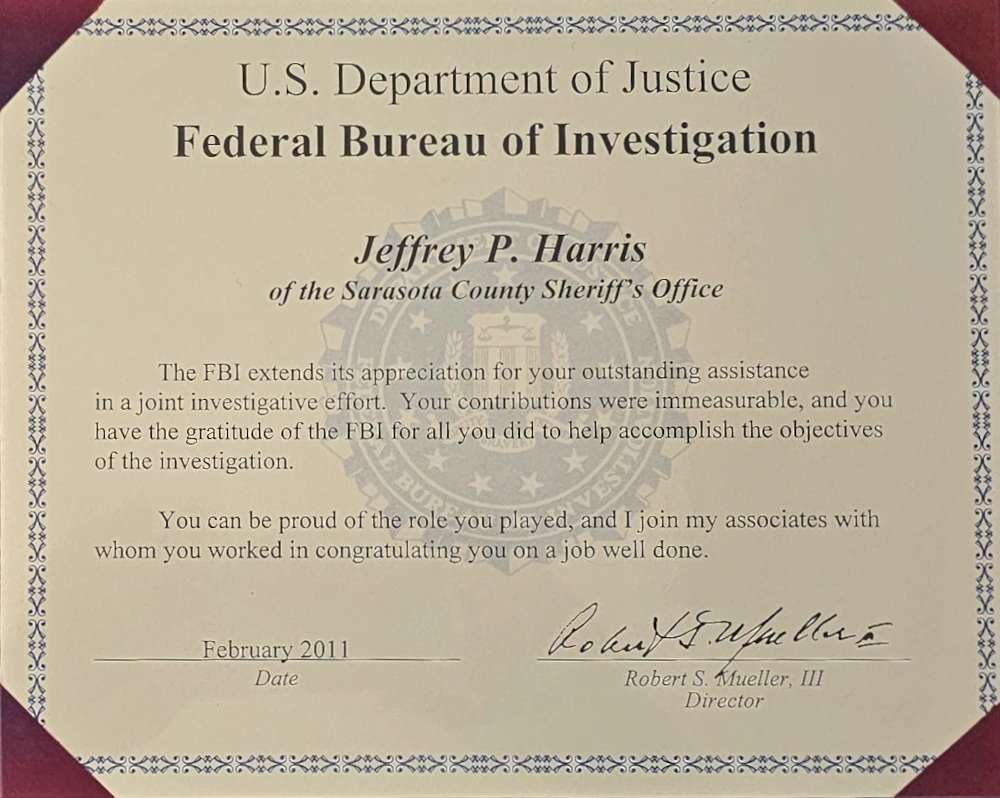
After working on the JTTF a awhile, I had to take the official Oath of Deputation from the Federal Marshall's Office. This was a meaningful moment for me and this simple piece of paper still holds many fond memories.
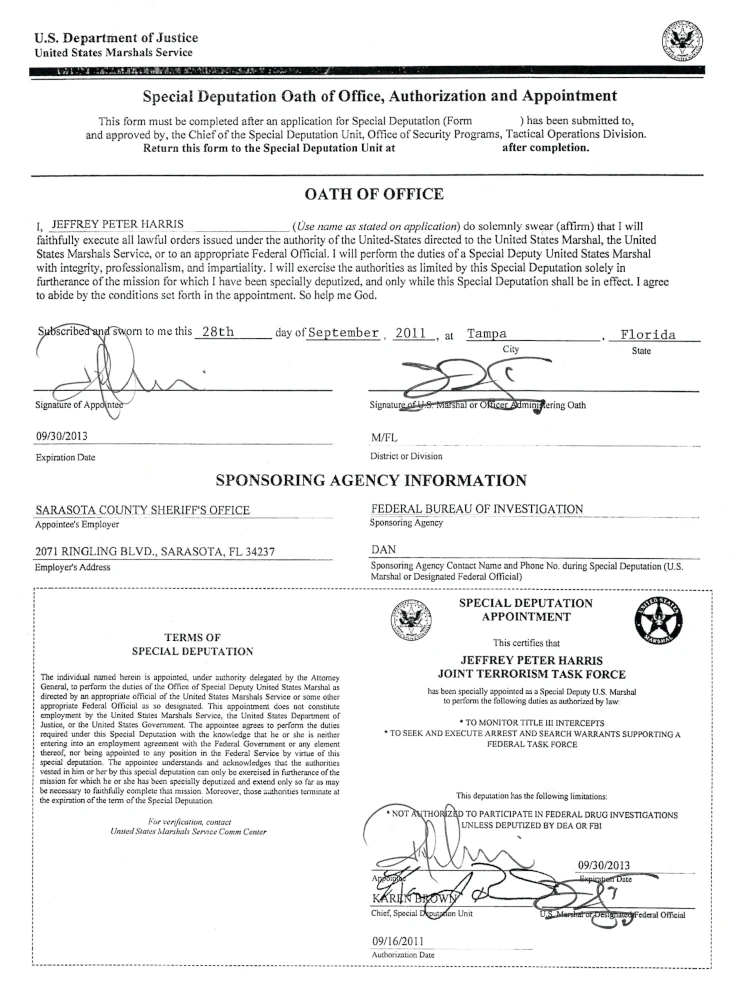 Oath of Office. Redacted.
Some JTTF Highlights
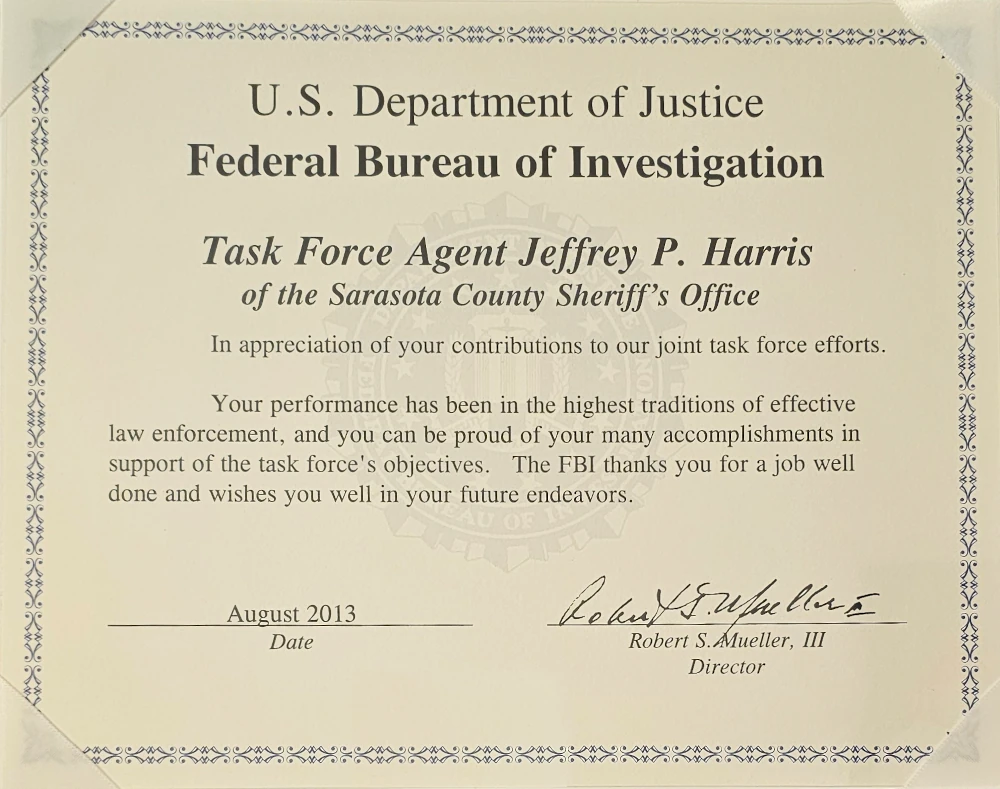
United States Secret Service
Below is an excerpt from the United States Secret Service website regarding protection details, roles and responsibilities.
We play a critical role in protecting U.S. and visiting world leaders, safeguarding U.S. elections through protection of candidates and nominees, and ensuring the security of key facilities and major, national-level events.
Our protective mission dates back to 1901, after the assassination of President William McKinley. Following the tragedy the Secret Service was authorized to protect the President of the United States. In 1906, Congress passed legislation and funds for the Secret Service to provide presidential protection. Over the years the number of our protectees and the scope of the protective mission has expanded in response to the evolving threat environment.
Protection Details
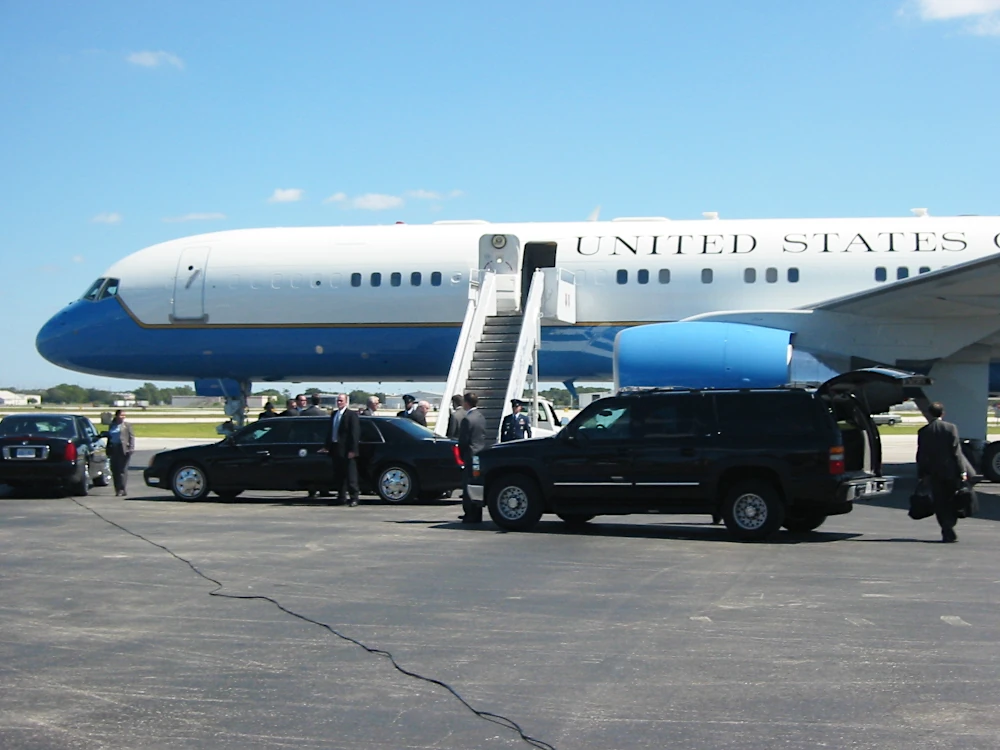
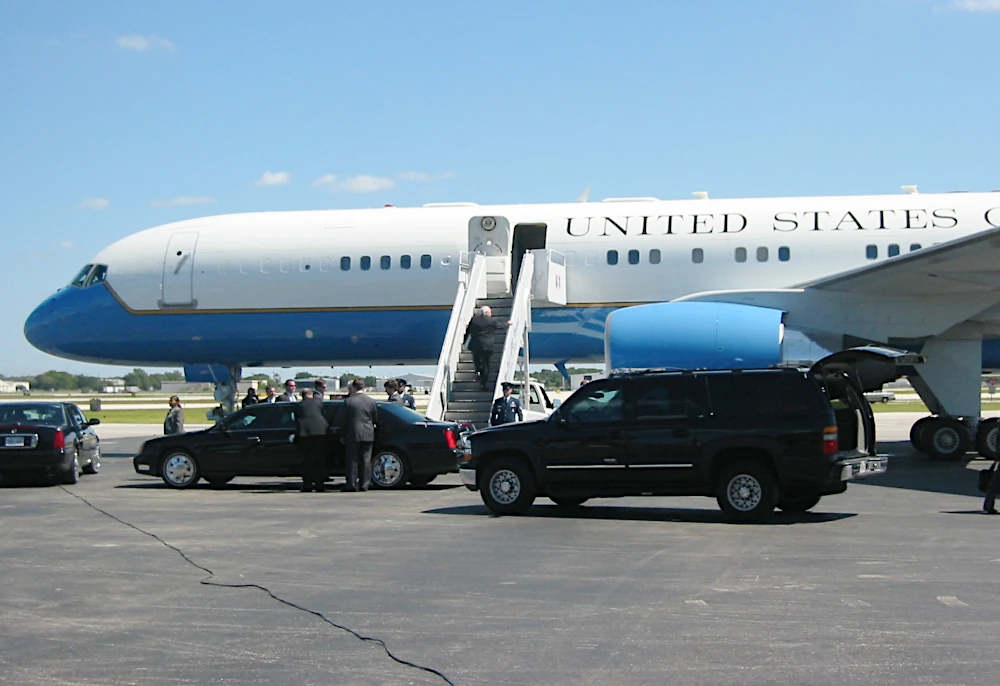
While in the Intelligence Unit at my Agency, and then on the JTTF, I very fortunate to be a part of several protection details. The Secret Service (USSS) is in charge of all of these of course, and would reach out to other federal agencies on big events. These protection details were very cool because for each detail I got to drive one of the vehicles in the motorcade.
- Senator Obama While he was running for president, he came to town. During our motorcade travel to the destination location, he wanted to stop and get out of the car in the downtown area. This was during October and he saw a makeshift pumpkin patch sale in a parking lot. He wanted to buy a pumpkin. This impromptu stop was a big security issue of course.
There was no pre-planning, and we did not know who was also in the area. So all of us stopped and got out of our cars immediately to block the street and look for anyone out of the ordinary. Luckily the stop was brief, and we were back en route within a few minutes.
- Secretary of State Hillary Clinton This detail was interesting for many reasons. One reason was that she too, made an impromptu stop during her visit. It was a very crowed scene but she wanted to get out of the vehicle and meet some people in the area. You just have to do the best you can. Luckily it was a brief stop.
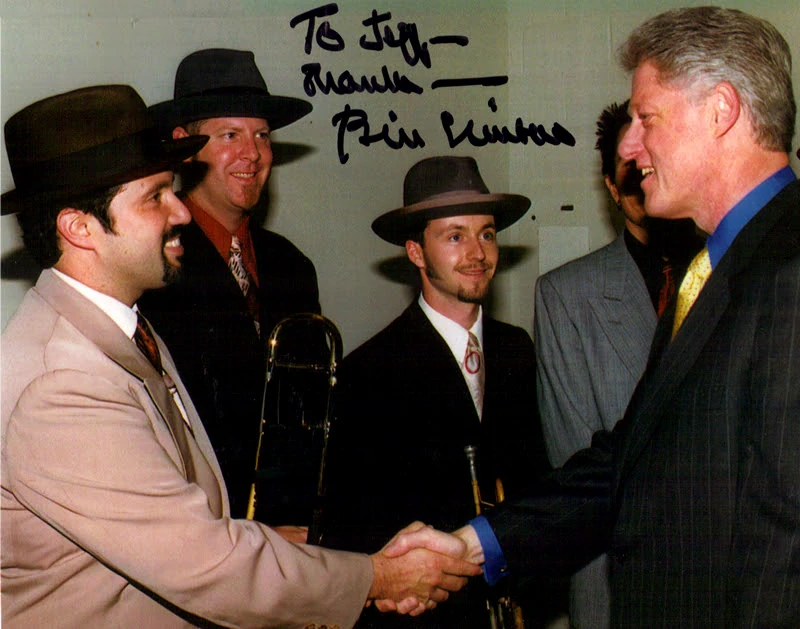
The big highlight for me was that I had actually met President Bill Clinton during my music days, and had a photo op with him. So for this protection detail, I brought that photo with me. After the detail, I asked one of Hillary's USSS assigned Agents a small favor.
While we were on the tarmac before take off, I asked him if he could give this photo to Bill for him to sign and then mail back to me, if possible? He said yes of course. I was blown away because within five days of that detail, it was signed by Bill and in my mailbox. So cool! (More on that 'full-circle' story in another article.)
Vice President Dick Cheney Not much to say about this detail. He was in and out of town pretty quick.
Canada Prime Minister Stephen Harper This detail lasted a few days and had a funny but true story during his family vacation here in town. The Prime Minister's young Daughter was swimming in the common area pool. Near the pool there was also a female high school teacher reading a book. The teacher noticed the young girl asked where she was from, to which she said Canada. The teacher then said that's great, The teacher asked her, do you know who the Prime Minister of Canada is? The girl replied, yes, my Dad. The teacher looked surprised for a moment, and was not expecting that answer. It was a pretty funny and a nice moment for everyone. It was great working with the Royal Mounted Police and of course Secret Service.
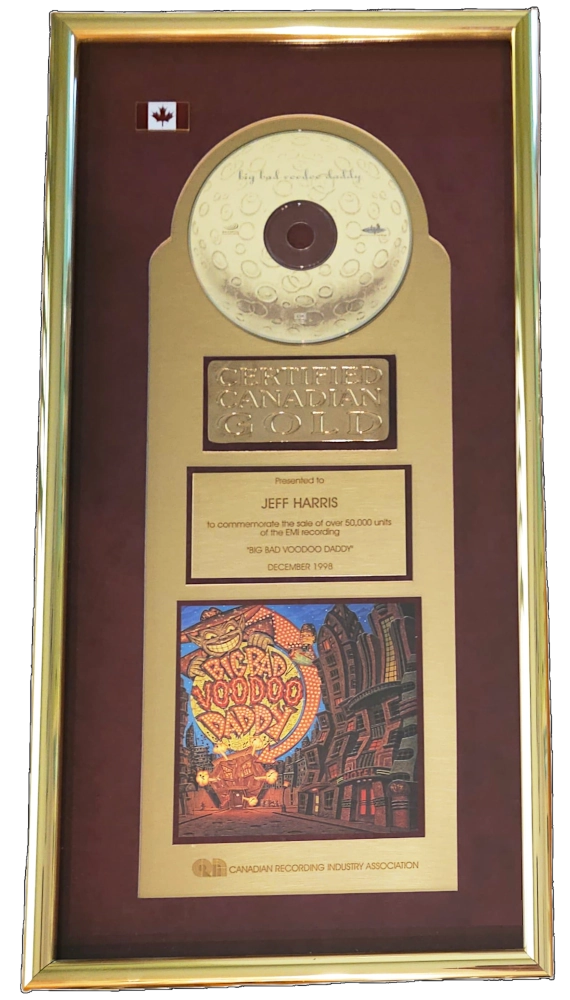
In my music days, our band was actually awarded a gold record from Canada. I wanted so badly to bring my Canadian Gold Record to the detail for the Prime Minister to sign, but I knew I was representing my Agency and did not want to get in trouble if someone got upset.
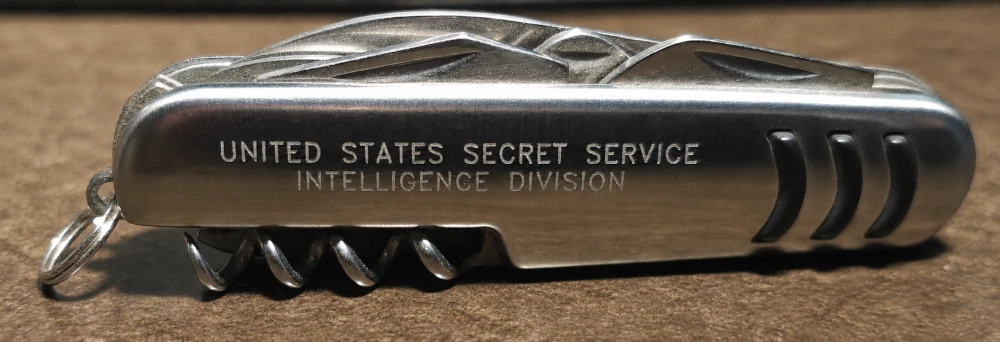
During this detail the USSS Intelligence supervisor, Mike Roche, gave me a wonder parting gift.
If you enjoy crime novels, Mike Roche, who is now retired, writes some great crime mystery books. Here is his crime novel website: Mike Roche.
The Tarmac
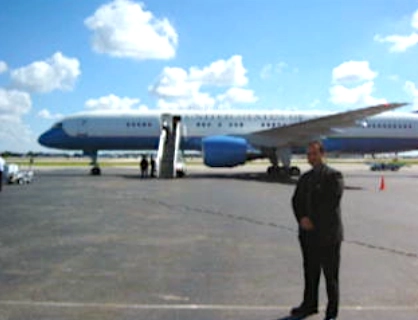
Here are a few photos from one of the details I got work on. The quality of the photos are not the best, but it was pretty awesome being there.
Officer of the Year Award
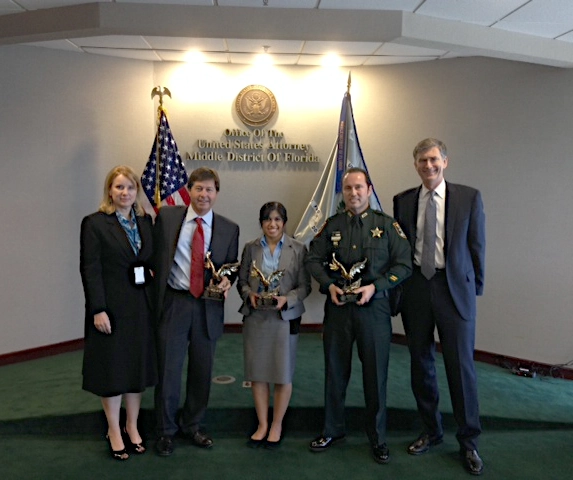
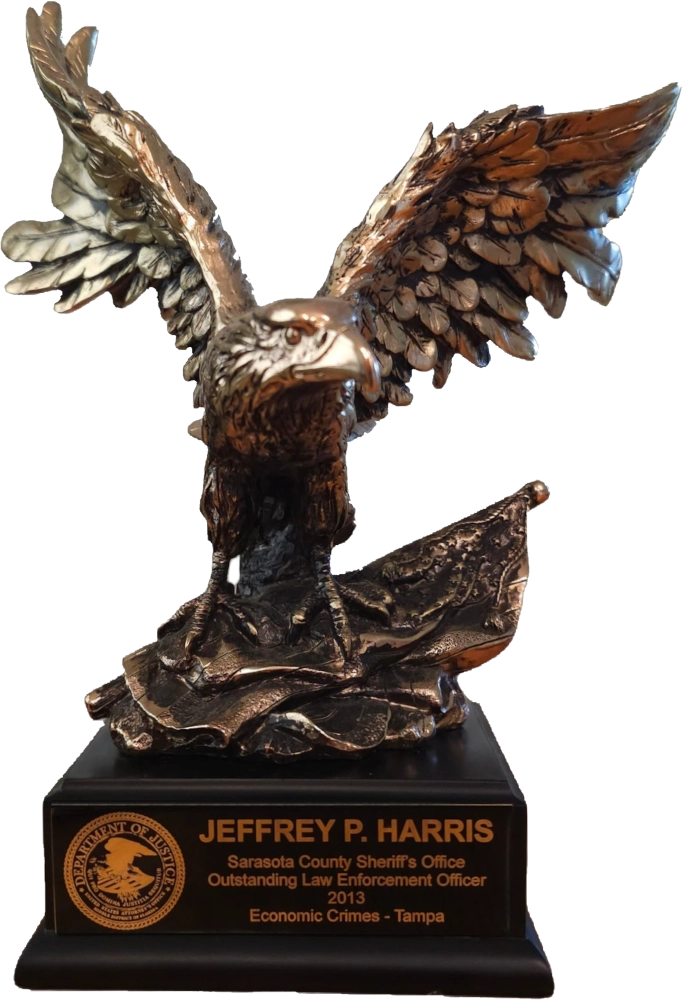
One the biggest cases I ever worked on at the FBI was with Agent Martinez. It was a case that brought over 20 federal convictions and took a few years to fully complete. It was also on this case that Agent Martinez and I had the longest single interview ever done ever. We interviewed over 13 hours straight. It was a massive financial case.
It was because of the work we did on this case, that we were presented with one of the highest awards that the Department of Justice gives, The Eagle. For me, it was the equivalent of getting a Grammy, because you are being considered this award, along with every federal agency, every Agent, and every investigation conducted for that year.
Here is a video of the Sheriff's Office Indictment Press Conference for this case if you would to view.
There are so many great federal Agents that deserve this award. They may work their whole career and make great cases, but never get this award. It's a lot of luck, and also a lot of hard work from everyone involved. It was definitely one of the biggest highlights of my entire law enforcement career.
The Department of Homeland Security
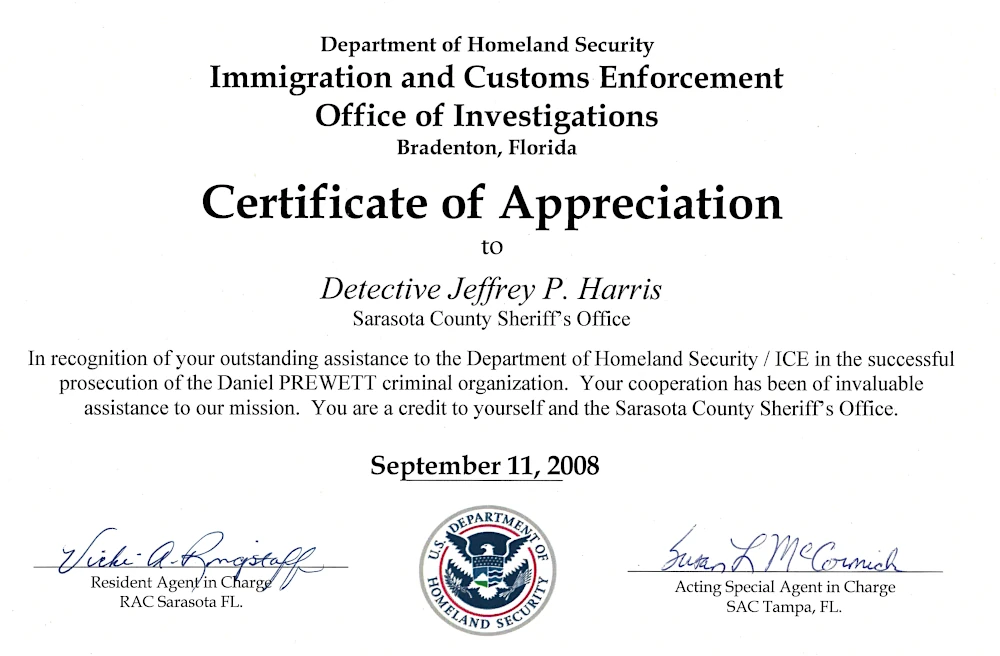
Another great experience was working with The Department of Homeland Security. I got work with a great HSI Agent, Agent Mclane. Not the Die hard McClane of course. A lot of great memories. Below is one of the cases we got to work together on. It became a very large case that had some twists and turns.
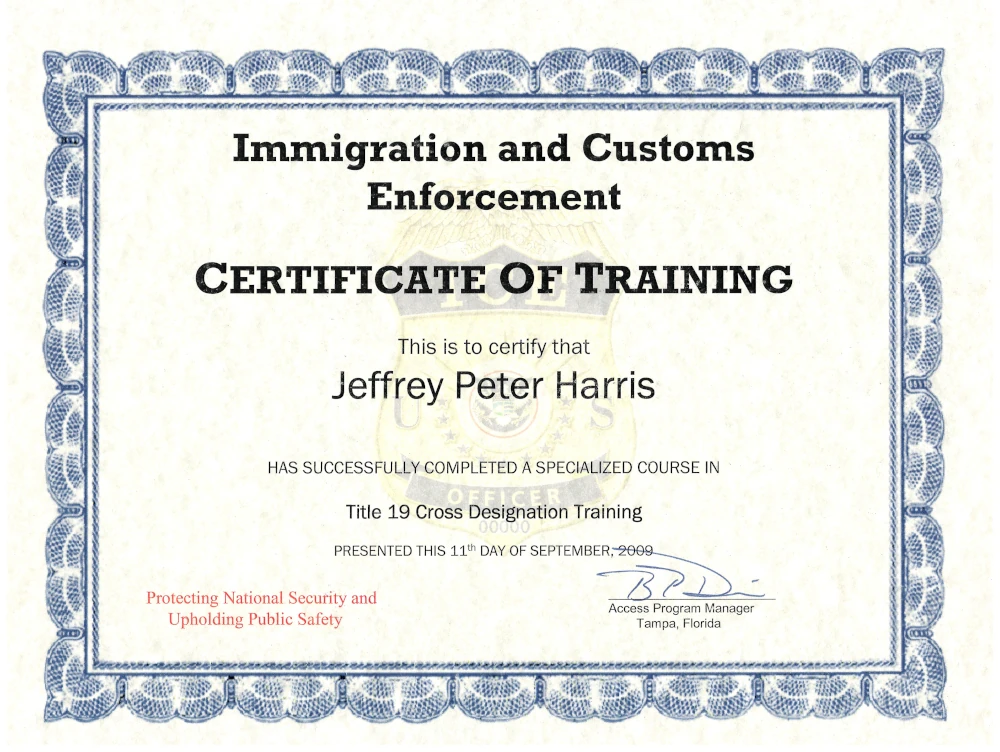
In 2009 I also had the opportunity to become cross certified with Homeland Security. This was a special moment also. I was able to assist Homeland Security intercept drug trafficking at the port point of entry.
USSS Financial Crimes Task Force
After my time working on the FBI JTTF, my Agency assigned me back in patrol. Working full-time at the FBI was a great experience, and I was happy that I had such a wonderful opportunity. I also knew it was my time to leave. While at the FBI, I saw several task force officers get rotated in and rotated out. It was just my turn to do the same of course.
After about a year in patrol, I got a call to be on the USSS Financial Crimes Task Force. It was a another federal task force where you get sworn federally. My duties for this task force was to work in the forensic computer division.
The fun part of this assignment was that I got to work on audio forensics. This combined my music background with my current forensics work. I was able to investigate and testify in federal court regarding audio forensics which was exciting and also nerveracking at the same time.
We assisted the Internet Crimes Against Children agency (ICAC). It was a great opportunity, but the mental strain became too much for me. Some days at work, I could not even eat lunch. After a several months, I requested to go back to patrol, and my supervisors allowed me to do this with no repercussions.
I commend the many Officers and Agents that can stick it out, and I was happy that I could help on a few of the big cases. I completed the rest of my career while in patrol. I felt very happy and very fortunate.
Now looking back on everything, I was so fortunate to experience working in law enforcement, not only on a local level, but also a federal level. I feel extremely lucky.
The odds of getting an opportunity to work in law enforcement are pretty hard in my opinion. Just getting hired in law enforcement is a huge challenge. Then being assigned to the FBI JTTF, and the USSS Task Force, including ICE are once in a life time experiences which I will always be grateful for, and have never taken for granted.
I always remembered throughout my music career and throughout my law enforcement career, what my martial arts teacher, Sensei Kirk Ellis taught me. The more influence and authority you have in life, whether as a parent, a boss, or a teacher, the more of a responsibility to have to help others. This concept helped me stay grounded and focused on what's really important in life.
Dedications
I would like to dedicate this article to my Mother who was a Navy Veteran. She worked in the White House for the Secretary of the Navy, and for President Kennedy. She also worked at the Pentagon.
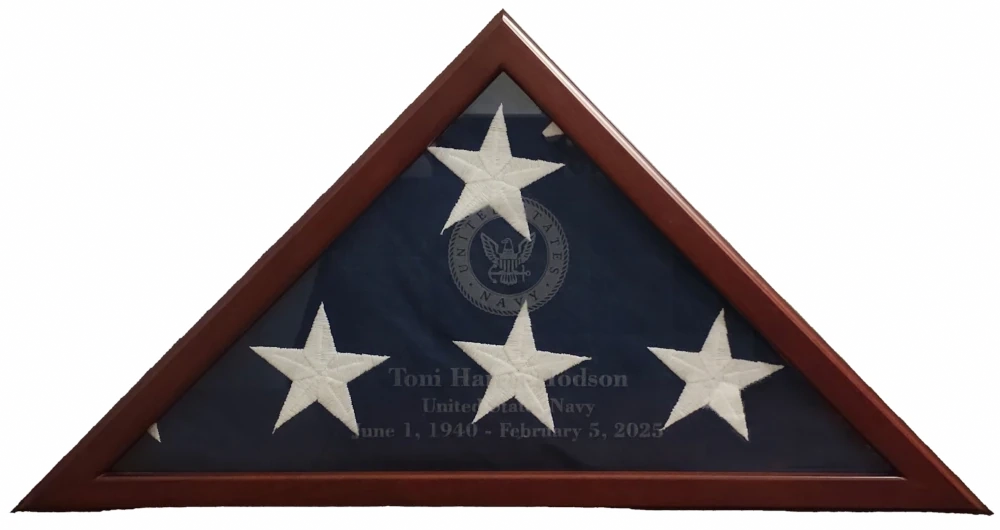
This article is also dedicated to my Uncle Jim Binder. He was Editor in Chief for the Army Magazine from 1967 - 1993. He also wrote and edited several books.
James Binder was a recipient of the George Washington Honor medal Freedoms Foundation, 1975, George Washington award editorial, 1974, 76. Served with United States Navy, 1944-1946; with United States Army Reserve, 1950-1954. Member American Society Magazine Editors, Society Professional Journalists, Cosmos Club, National Press Club, Detroit Press Club, Ends of Earth Club, Society of Midland Authors.
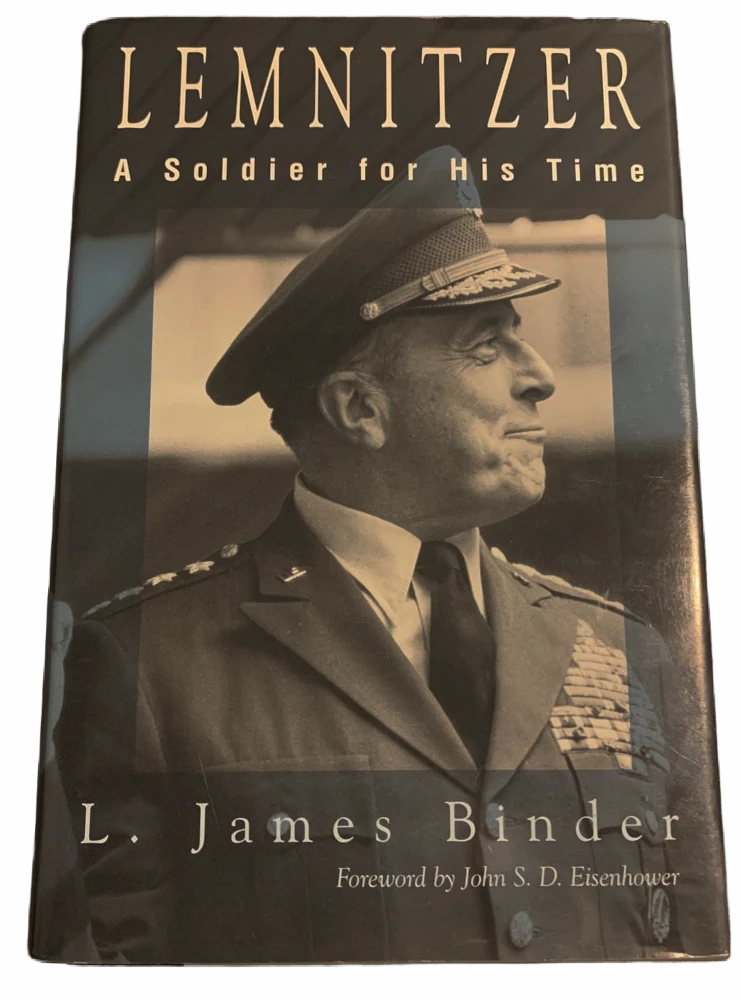
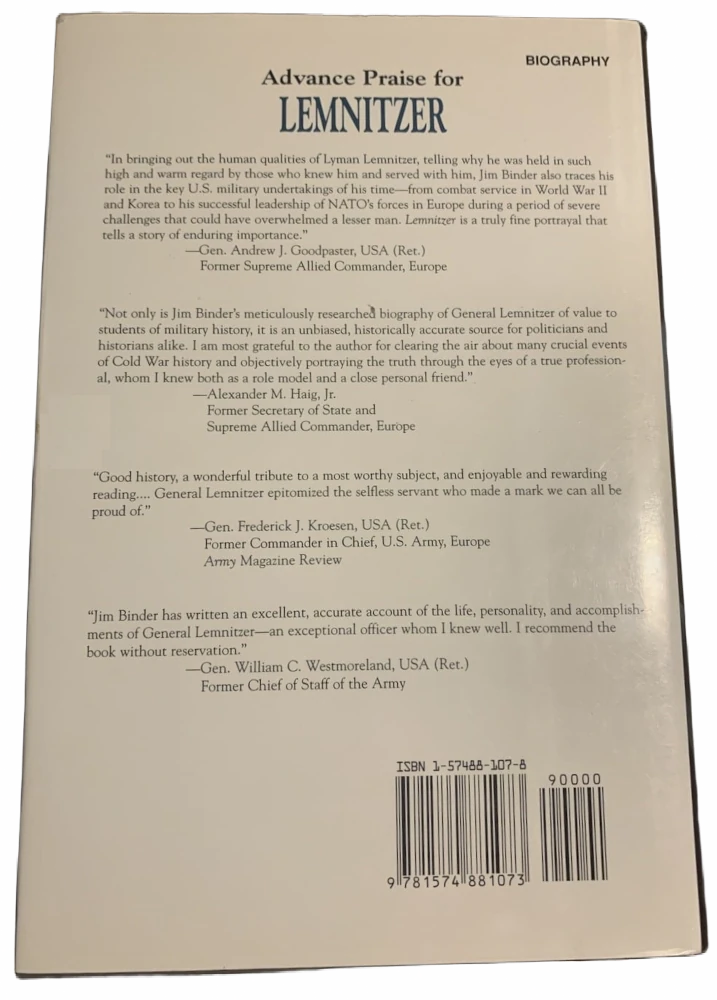
Forward by John S.D. Eisenhower Lemnitzer : A Soldier for His Time
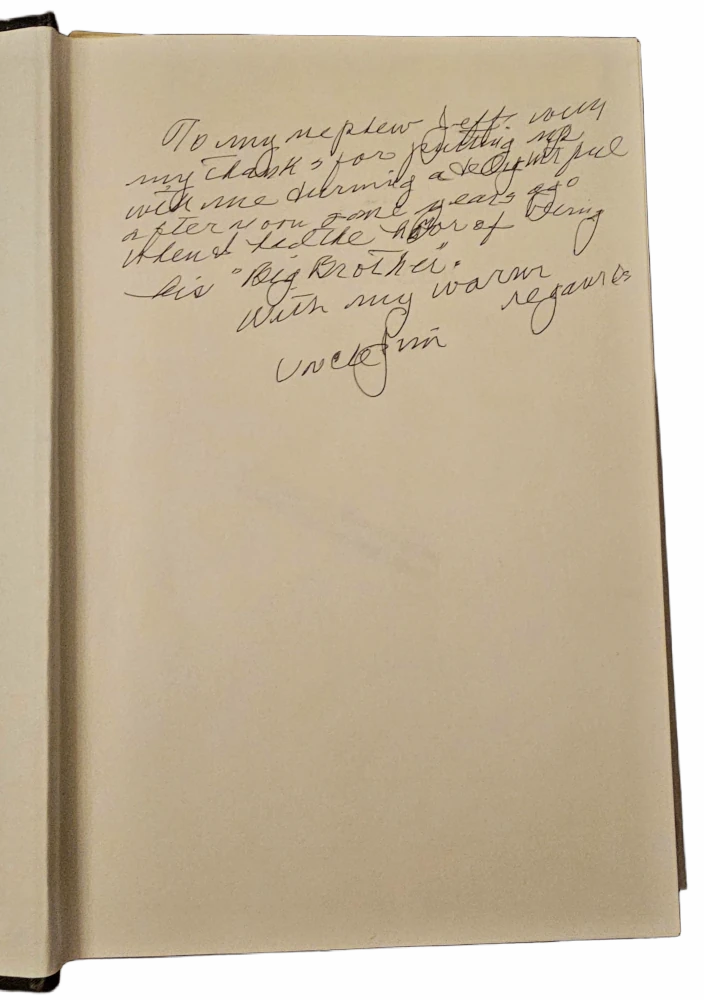 A nice note from Uncle Jim.
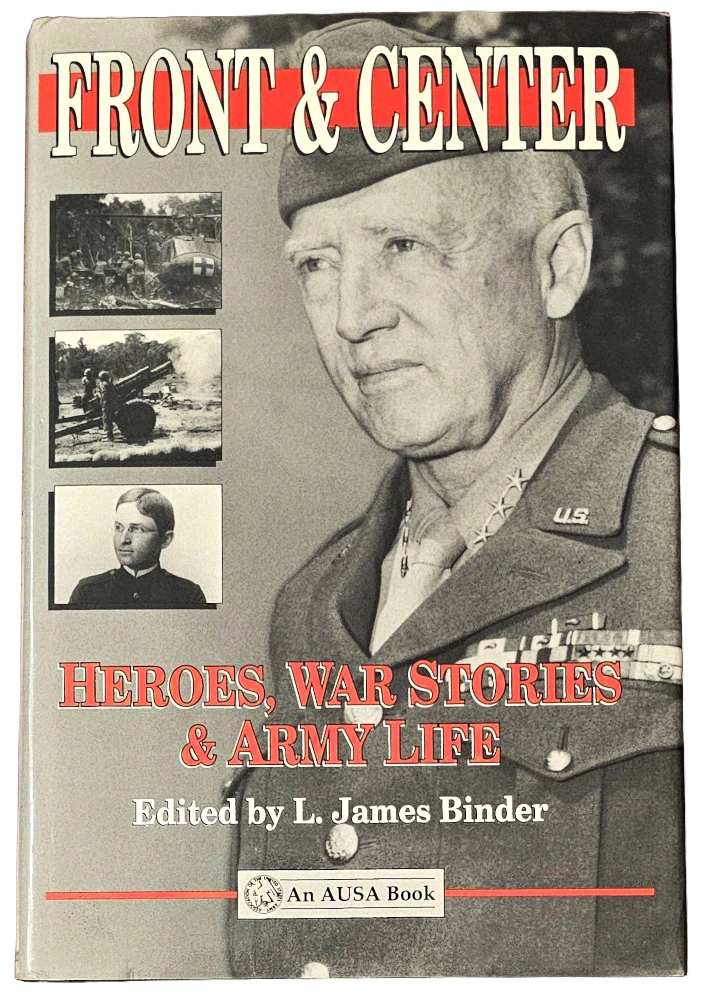
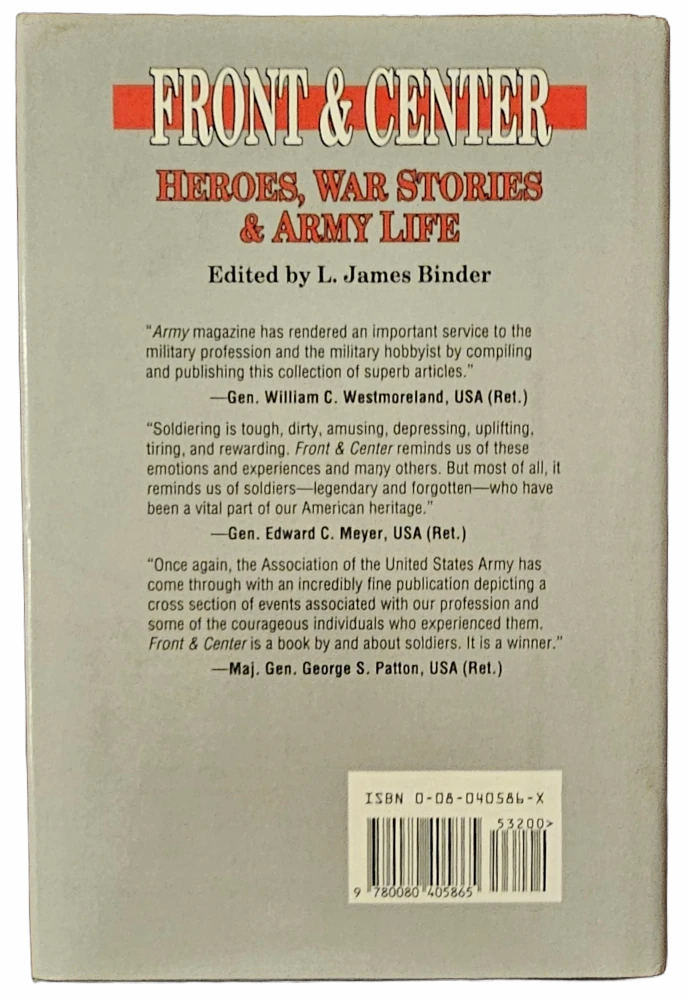 Front and Center: Heroes, War Stories and Army Life. General George Patton's comments were very nice.